Showing posts with label review. Show all posts

Tuesday, January 16, 2007

The Silencer

Director: Steve Lawson, Siman Wyndam
Starring: Glenn Salvage, Maye Choo, Jim Clossick, Steve Lawson
Production Budget:
~US$5,000
Running Time: 75 min
Released: 2006

Glenn Salvage plays Michael Eastmann, a policeman who is framed during a botched drugs bust, shot and then left for dead (not to be mistaken by Left for Dead, another movie starring Salvage, where he isn't - left for dead that is). Horribly injured but not dead, he is rehabilitated and then sets out for vengeance. The only problem is he can no longer talk, and his spine is so badly damaged that a hard knock will paralyse him for life (OK, that's two problems). His wife (Choo) grows distant and his former colleagues shun him, but he can still kick arse.

Director Steve Lawson and star Glenn Salvage were both involved in Left for Dead, which was an overlong mess. The Silencer is the exact opposite, a short, neat action movie. The action scenes are great, including a great moment in an underpass where a bunch of thugs hassling a lady meet their worst, silent, motorcycle helmeted, leather clad nightmare. The story is pretty clichèd (although it flows well), but that's not the point, this is a movie about revenge, and it is served up with quality. This movie was made for virtually nothing (Lawson describes it as the cost of a family holiday). All indoor scenes were set in Lawson's house, where one room was continually remodelled for different scenes, and the cast was kept nice and small and mostly volunteered their services. And good for them too. Everyone looks good in this; Salvage has real presence and just a hint of charisma, the martial arts and stunts are awesome, and the directors show that they can really direct.
"The difference between pornography and erotica is lighting." - Gloria Leonard
One of the most obvious things that shows up a low budget movie is the lighting. The other martial arts movies I saw at Bloodbath, Left for Dead, and Intergalactic Combat were both notable for their bad lighting. The lighting in The Silencer is so much better, with light streeming through windows and a subtle glow on characters faces. Good lighting is one of those things that's difficult to describe, but obvious when you see it. This was $5,000 very well spent. If Left for Dead was martial arts porn, then this is martial arts erotica.

When they can make a $5,000 movie look like a $500,000 movie, imagine what they could do with $500,000. I am curious, and hopefully The Silencer will get the film-makers noticed by some people with some cash. So pay attention, all right!

$$$

Monday, January 08, 2007

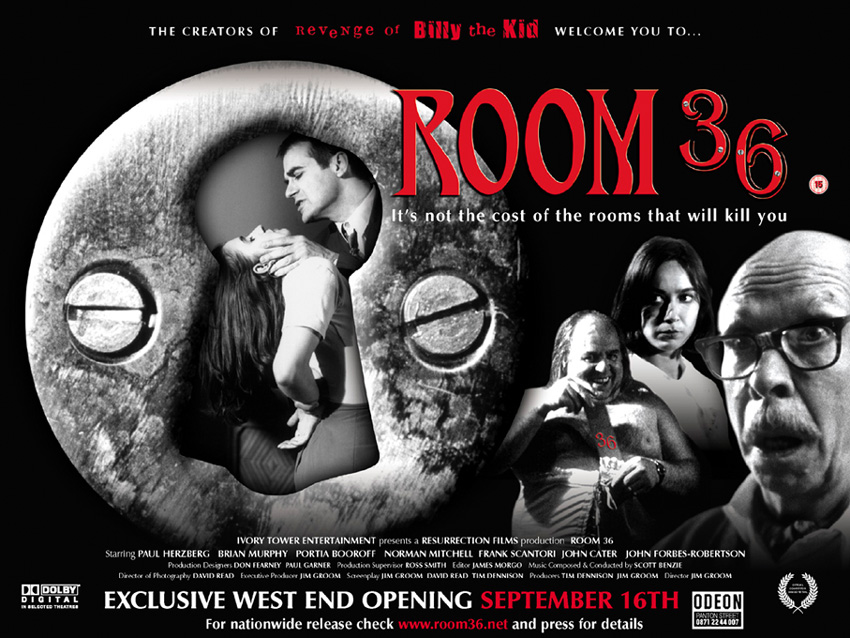
Room 36

Director: Jim Groom
Starring: Paul Herzberg, Portia Booroff, Frank Scantori, Nicola Branson
Production Budget:
~US$300,000 (guesstimate)
Running Time: 90 min
Released: 2005

Set mostly in a seedy London hotel, the Midlothian, Room 36 is a tale of mistaken identity, although in this case it is the identity of the room that causes the confusion. In room 36, an obese salesman (Scantori) awaits a prostitute (Branson), while next door, in room 38 a hit-man (Herzberg) has arranged a meeting with a young, female MP (Booroff). All it takes is one chipped room number and things go horribly wrong.
"It might be a Scottish name, taken from a story about two men in a train. One man says, 'What's that package up there in the baggage rack?' And the other answers, 'Oh that's a McGuffin.' The first one asks 'What's a McGuffin?' 'Well' the other man says, 'It's an apparatus for trapping lions in the Scottish Highlands.' The first man says, 'But there are no lions in the Scottish Highlands,' and the other one answers 'Well, then that's no McGuffin!' So you see, a McGuffin is nothing at all." - Alfred Hitchcock.
This film took 11 years to make, due to one disaster after another, including death, fire and Kodak's decision to stop producing the film they were using half way through filming. Yet the director persisted, and it was well worth the effort. The grainy black and white looks fantastic, giving it very much the feel of a film noir or early Hitchcock. It even has a classic Hitchcockian McGuffin, in the microfilm the MP is supposed to be delivering to the man who turns out to be a hit-man. Yet it is also very funny, at times almost to the point of slapstick. The acting is excellent, not even considering the budget, and the 10 year commitment many of them made to it with little or no pay.

Groom's only other movie was 1991s The Revenge of Billy the Kid which centred around the mutant child of a farmer and his goat (get it, Billy the Kid). I haven't seen it but am intrigued, and who wouldn't be?

I urge you to seek out this film, so then in another 11 years we might get to see what Groom comes up with next.

$$$$

Saturday, December 30, 2006

Chain Reaction

Director: Olaf Ittenbach
Starring: Christopher Kriesa, Martina Ittenbach, Simon Newby
Production Budget:
US$1.5M
Running Time: 103 min
Released: 2006

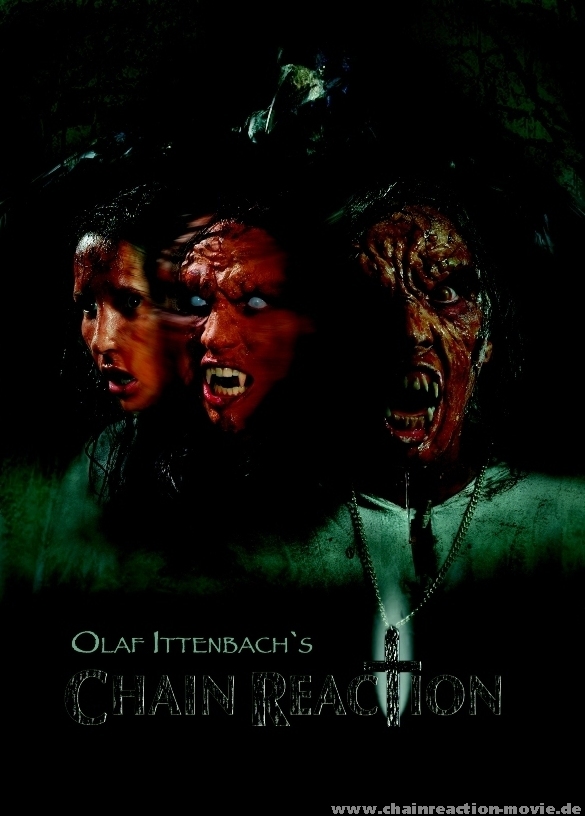
A dead Raven starts a freak chain of events leading to a prison transport bus crashing in the Rocky Mountains. The prisoners escape, kill the guards, take a doctor hostage and flee into the woods, heading for Canada. En route they stumble across an old homestead, and a young woman 'milking' (by which I mean bleeding) a goat. They break in and find a strange family, who speak nothing but dire old-English, resemble 18th century pilgrims and drink goat's blood. It turns out they are a family of vampires or demons or some-such and things soon turn messy, very messy.

This movie is really, incredibly stupid, and at times hilarious. Made by German director Olaf Ittenbach, it is pretty well directed, the acting is mostly OK - especially considering they are mostly Germans playing Americans - and the dialogue is mostly terrible. The residents of the house are supposed to be speaking old-English, perhaps like the Amish would speak, but it is basically incomprehensible. It's kind of a combination of bad Shakespeare and Yoda. Apart from "Aye, have I", which Martina Ittenbach's character constantly answers to every request, I don't have any particular quotes that I could give, as I didn't write them down at the time (and the internet has failed me, curse you!). But trust me, there are some piss-funny lines in there, as the chuckles throughout the cinema at supposedly serious conversation can attest.

Thou be able to enjoyest much bloodshed. Wherein thine prisoners findest a saw of chain, thou does not know, but byest then hast reason been given over to madness.

Sorry, what I mean is, there is plenty of blood, guts and decapitations. Where the hell the prisoners find a chainsaw in a primitive farm house I will never know, but by that point, reason has already taken a severe beating, and soon gets sawn in two (or possibly twain).

This is apparently one of the less gory of Ittenbach's movies, but since he is considered one of the goriest directors around, there is no shortage. He often works as a special effects supervisor on his own and other director's movies, and it shows. The make-up and effects are really good for such a low budget film - although I suspect IMDB (where I get most of my budget info) might be slightly underestimating the budget - if not, I'm impressed. The battle scenes are fairly short, but highly entertaining.

Oddly, this is like a movie and its sequel all in one. Once the first lot of action concludes, our good doctor is sentenced to prison, and while being transported on a prison bus a dead Raven starts a freak chain of events leading to a... never mind. I guess they just didn't have enough material for a full length movie. And the melodramatic ending is surreal and stupid.

Taken with two or three beers and a few mates, you should have a good time with Chain Reaction (called House of Blood if you are in the U.S.). Aye, didst I.

$$$

Sunday, December 17, 2006

The Uncanny

Director: Denis Héroux
Starring: Peter Cushing, Ray Milland, Donald Pleasance
Production Budget:
~US$600,000
Running Time: 89 min
Released: 1977
"Kitty at my foot and I want to touch it"
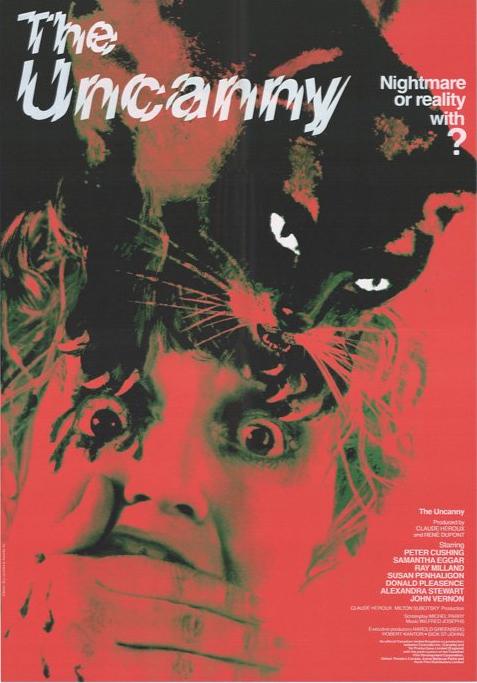
Peter Cushing brings his unique comic stylings to this trilogy of tales about our fine feathered friends and secret rulers of the Earth, cats. It begins with him visiting a publisher and begging him to publish his book detailing the evils perpetuated by cats around the world. Being a pretty smart guy, he chooses a publisher who is a cat lover, duh. To prove his feline conspiracy theory, he relates a series of far-out feline tales (with plenty of far-out feline tails thrown in for good measure). The first involves an old rich woman who writes a will leaving most of her assets to her dozens of cats, and none to her no-good nephew. The nephew hatches a plan with the maid to kill the woman, destroy the will and take the fortune that is rightfully his (you know, rightfully his because his dad's sister is rich). The cats have other ideas, and things soon turn bloody and people get eaten (there are lots of cats in this one). The second sees a young girl unusual powers move in with her aunt and uncle when here parents die. Her bitchy cousin causes her grief until she and her beloved cat enact a squishy revenge. In the third episode, a famous actor (Pleasance) kills his actress wife in an "accident" and replaces her with a young, pretty, and untalented actress in both his current movie - coincidentally a filmed version of The Pit and the Pendulum - and his bed. But the dead wife's cat has other ideas.
"Kitty ran up and scratched me though my jeans"
British horror studio Amicus was in decline when this movie was made - failing to get adequate funding in the UK, most of the financing and production came from Canada. The Uncanny follows an identical structure to previous Amicus anthologies such as Dr. Terror's House of Horrors (1964) and Tales from the Crypt (1972), which is a downside, as, by 1977 the traditional horror anthology had had it's day - although George A. Romero and Stephen King had fun with the concept in the 80's with the Creepshow movies - and this movie has the feel of a 1960s movie rather than a late 70s one, and probably looked dated when it was made. While mostly a bit silly - cats just aren't that scary - it is saved by some cool scenes, especially in the mass attacks and brutal killings in the first episode, and the surprising and bloody ending of the second.

As a life-long cat hater, The Uncanny didn't change my opinion of cats any, but I'd be interested to see what die-hard cat lovers think of it. Maybe if this movie inspires a few people not to own cats, then the birds, small mammals and allergy sufferers of the world will be thankful. So, as an allergy sufferer, I highly recommend this to all cat owners and would be owners. Everyone else, watch if it's on the telly, and there is nothing better on.
"Fuck you kitty, you're gonna spend the night... outside!" - The Presidents of the United States of America
$$$

Friday, December 15, 2006

Albert Fish

Director: John Borowski
Starring: Oto Brezinn, Derek Hall, Cooney Horvath, Garrett Shriver
Production Budget:
Dunno - pretty small
Running Time: 86 min
Released: 2007 - I traveled through time to see it.

This documentary is reminiscent of the types of American 'true crime story' or 'real life detective' shows you get on television. A deep-voiced narrator describes how a criminal was brought to justice, interspersed with recreations of the crimes and interviews with key figures and experts. The only thing that could really distinguish Albert Fish from the hundreds of these shows you get on the Discovery Channel is the criminal himself - Albert Fish, painter, gentleman and child-eater.

While Albert Fish was a deviant of the highest order, into such philias as coprophilia, urophilia and paedophilia, his most noteworthy act - and the subject of a fair chunk of the movie - was the letter he sent to the parents of Grace Budd, a ten year old girl he had abducted and, well, if you really want to know you can read the letter.
"On Sunday June the 3, 1928 I called on you at 406 W 15 St. Brought you pot cheese—strawberries. We had lunch. Grace sat in my lap and kissed me. I made up my mind to eat her." - Albert Fish
The most interesting interviewee in this documentary is Joe Coleman, the man who owns the original Albert Fish letter, and is kind of a fan of Fish. Hilariously, he got the letter by going to the police records office and asking for a copy, and the clerk accidentally gave him the original, which he obviously kept. I'm thinking of doing the same with the Mona Lisa at the Louvre.

So, not overly original, but a well made documentary about an interesting topic, or, if you will, a decrepit piece of filth about a total sicko.
"Is that all you've got" - Allegedly said by Albert Fish after the first jolt of electricity failed to kill him. Also said by Marv in Sin City.
$$$

Saturday, December 09, 2006

Intergalactic Combat

Director: Ray Brady
Starring: Gordon Alexander, Elizabeth Tan
Production Budget:
~US$200,000
Running Time: 90 min
Released: 2006

By the same director as Boy Meets Girl but a very different movie, Intergalactic Combat is a movie that sounded great, but disappointed. It has an interesting, if rather juvenile premise. The Earth is invited to submit a team of warriors to an unarmed combat tournament against teams from other planets, with the losing planet destroyed, or something. However, not only do we not get see this intergalactic battle, we don't even get to see the world championships, just the selection trials for the UK team. Like the previously reviewed Dark Intruder, this is actually a T.V. pilot, although not funded by any T.V. station. The plan is for the first season of the series to feature the UK team travelling the world battling against other countries, with the second season concentrating on the interplanetary battle.

The CGI work is pretty basic and the dialogue is terrible, but after all, this is a dumb action film, and the action scenes are pretty well done. I'm not a huge fan of martial arts, unless it is being done by Jacky Chan, but Brady has obviously gotten a pretty decent bunch of fighters together, and the premise works to show off their skills. The characters are interesting enough (big black guy, former world champ coming out of retirement, oriental guy, young girl who learned to fight to get away from bully's, twin's; one good, one bad - that sort of thing) that kids could probably get into it. If made into a series, it would require a much bigger budget (Brady admitted as much at the screening), especially if they intend on having humans battling against CG aliens, which they do.

The main thing that bothered me about this movie was the following quote, taken from the IMDB summary, and featured in the Bloodbath programme.
"An action movie shot in real time that plays out like a shoot-em-up video game. Stunning camera work, complex and always moving. An un-relentless action film that will attract, through word of mouth, all those hooked on gaming on their PC's and drag them back into the cinema auditoriums." - bRAdY
I suppose there is nothing wrong with the director writing his own plot summary, and talking up his "stunning camera work", and the "un-relentless action", however, the phrase "plays out like a shoot-em-up video game" is just plain misleading. As any geek knows, shoot 'em up video games involve a single character or - more commonly - spaceship moving through various levels shooting things up. Intergalactic Combat's real time element involves cutting from character to character as they have battles with a variety of adversaries in different set locations. This is somewhat reminiscent of versus fighting games like Street Fighter II, but certainly bears no resemblance to any shoot 'em up. You need to get your terminology right, Ray! People (like me and the Comic Book Guy) are very particular about this kind of thing. I can assure you, no-one ever recovers from a "Worst. Episode. Ever" put-down, so don't risk it.
"There is no emoticon for what I am feeling!"
As a low-budget pilot for a children's television show in the vain of Mighty Morphin Power Rangers, this works. As something I would ever want to see again in a million years, it doesn't.

$1/2

Thursday, December 07, 2006

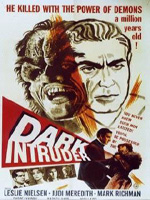
Dark Intruder

Director: Harvey Hart
Starring: Leslie Nielson, Peter Mark Richman, Judi Meredith, Gilbert Green
Production Budget:
Small
Running Time: 59 min
Released: 1965

This was originally filmed as a T.V. pilot for a series called Black Cloak. The series was never made, so they released it as a film in an attempt to recoup costs. It is not immediately obvious that this is a T.V. show, but the structure and especially the ending imply something that will be ongoing.

Leslie Nielson plays Brett Kingsford, a playboy in San Francisco in the late 19th century who secretly aids the police in investigations of the occult. The story concerns a series of brutal murders, apparently committed by someone/thing not entirely human. After each murder a strange statuette appears, which slowly mutates, providing the key clue. Assisting the police in matters of the occult does not sit well within Kingsford's peer group, so he takes to wearing disguises when out with the police - although, why he would need a different costume for each meeting belies explanation. Kingsford's eccentricity is established early on, as we are introduced to him, his dwarf butler and has large old house full of secret passages.
"Surely you cant' be serious."
"I am serious, and don't call me Shirley"
This movie was made well before Airplane (a.k.a. Flying High), after which Nielson became typecast (and made millions of dollars) as the deadpan we all knew and loved, and then got sick of - anyone keen on Scary Movie V? It's in production. In this he plays the playboy (or should that just be 'plays the boy') with a knowing glint in his eye. The character is quite similar to Bruce Wayne, in that he is superficially a self-centred nob, but secretly has a deadly serious vocation, which his wealth allows him to pursue.

It's unlikely that many people will get a chance to see this. After five minutes searching the Internet, I couldn't find any information about DVD availability. I guess it's the philosophical question of our time... if it's not available online, does it actually exist.
"Surely there must be something you can do."
"I'm doing everything I can... and stop calling me Shirley."
Maybe it will come on the telly late one night. If so, it's worth a look. It's entertaining enough and you may see Nielson as you have never seen him before - although if you feel that way inclined, Forbidden Planet is a really good early Nielson film.

$$$

Monday, December 04, 2006

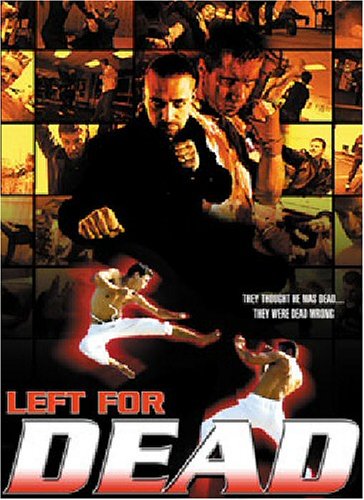
Left for Dead

Director: Ross Boyask
Starring: Glenn Salvage, Andy Prior, Adam Chapman
Production Budget:
Small, self funded.
Running Time: 105 min
Released: 2004

I enjoyed this movie for the first 20 min, up until the time the DVD screening at Bloodbath crashed. It featured a long and inventive battle scene set outdoors in an industrial area in a fictional UK city; loads of Kung Fu, an assortment of weapons, and splatterings of blood. Once the projectionist sorted out the problems and the rest of the movie screened, I was in for a disappointment. The next 80 minutes feature about 5 minutes of unoriginal storyline (mobster thug decides to retire, boss won't let him, sends other thugs to kill him, they fail, and thug sets about enacting revenge) and the rest wall-to-wall martial arts fighting.
"It becomes quickly apparent that the film's main remit is to screen as many fight sequences as humanly possible, but one can have too much of a good thing and ultimately sometimes less is more" - Bloodbath programme notes.
This may work as a CV padding exercise for the director and performers to show off as many of their skills as possible, but as a movie, I found it pretty boring. Practically the whole thing was just people fighting. While the fight scenes are well choreographed, the overall production values are uninspiring. The Silencer, which was shown the following night, features the same lead (Salvage), and many of the same performers and elements as Left for Dead, and is so much better, thanks to a better story, better production and better direction - my review of this should be up in the next week or so.

This movie is basically a porn movie with martial arts replacing sex. It has bad lighting, bad acting, but will work for those looking for some cheap thrills, in the form of people beating the crap out of each other.

$$

Sunday, December 03, 2006

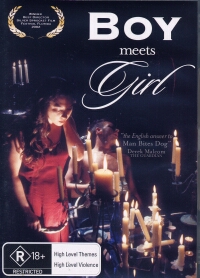
Boy Meets Girl

Director: Ray Brady
Starring: Tim Poole, Danielle Sanderson, Margo Steinberg
Production Budget:
under US$100,000
Running Time:
93 min

Boy meets girl, girl drugs boy, girl tortures boy - repeatedly, for 80 minutes. That's about it.
"Sadism: a sexual perversion in which gratification is obtained by the infliction of physical or mental pain on others" - Merrian Webster Online.
This was banned for 8 years in Britain, yet has no sex, no nudity, and very little blood. Ray Brady has admitted that he set out to make a censor baiting film. He researched the main reasons movies had been banned in the previous few years, then added those elements together to create this movie. It seems the censors weren't especially worried by the obvious things above, it was sustained sadism that got them hot under the collar, and Boy Meets Girl has this in spades (or, in rhyming slang, Marquis de Sades*). Sadism, depravity, torture, microwaved hands... it's all there. When the main character is tied to a dentists chair in his underwear for 9/10ths of the movie, you can be sure this is not going to be a romantic comedy.

Boy Meets Girl
is remarkably similar to 2006's Hard Candy. In fact, in many ways they are almost identical. A man is drugged, then tied up, and a battle of wills ensues with his captor. The main difference is the motivation of the female character. In Hard Candy, the girl is motivated by revenge against paedophiles, while in Boy Meets Girl, the motivation is pretty much non-existent. She's just a cruel, cruel person.

Oddly, about 20 minutes in, the female character (Steinberg) is rather inexplicably replaced with a completely different woman (Sanderson). It turns out that part way through filming, Brady decided that Steinberg wasn't working out, and replaced her, and rather than re-film the start, he worked this into the script. It's a bit awkward, but understandable given that he was just starting film school and had a very limited budget to work with.

This is an ultra low budget, psychological thriller, with convincing performances. It's uncomfortable to watch, but you will enjoy this if you take pleasure in watching other people take pleasure in the pain of others (which I guess would make you a metasadist). That doesn't make you a bad person, mind.

$$$

*Marquis de Sade, sadism, spades, get it?

Saturday, December 02, 2006

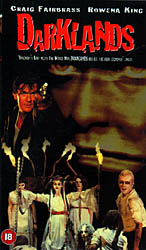
Darklands

Director: Julian Richards
Starring: Craig Fairbrass, Jon Finch, Rowena King, Roger Nott
Production Budget:
US$750,000
Running Time: 90 min

Darklands follows journalist Frazer Truick as he investigates the mysterious death of the brother of trainee journalist Rachel Morris. Delving deeper, Truick becomes convinced that the tragedy was murder, committed by a bizarre religious cult. But as the evidence unfolds, things take on a more sinister and potentially lethal significance for the reporter, as he becomes embroiled in devil worship, witchcraft and ultimately human sacrifice!

Summary written by Julian Richards

The fact that the writer/director had to write his own plot summary on IMDB sums up the lack of interest in this movie. Just to rub it in, there are no trivia and no goof listings.
"Darklands, a 1996 Welsh horror film." - The complete text of the Wikipedia listing.

This movie will probably never be mentioned without being linked with The Wicker Man, which is a shame. It's not that the films aren't similar, (they are) it's more that mentioning the similarities between Darklands and such an iconic film a) belittles this film, and b) ruins the ending which would otherwise come as a shock. It is perhaps because of this that whereas the ending of The Wicker Man is rather drawn out, the ending here is quick and brutal - perhaps Richards realised that the ending would be widely known beforehand, so there was no point dwelling.

Julian Richards admitted before the screening that he didn't know everything about film-making when he made Darklands, which was released in 1996, and for the DVD release he has re-edited the film, removing 7 min that were either awkward (including taking out a sex scene: who has ever done that voluntarily?) or slowed the first act. This 'director's cut' was what we saw at Bloodbath, and while I have not seen the original for comparison, I was pretty satisfied with this version. After the film, Richards complained that he was forced to use Craig Fairbrass in the main role due to a pre-existing contract Fairbrass had with the financiers. He felt that Fairbrass was not suited to the role, but, even so, I thought he was quite good, and certainly the biggest presence in the movie. The other performances are also pretty good.

While others would complain that Darklands is derivative, there are some original elements which I really liked. One particular scene which I found particularly cool (although it may be just me) was when Truik is filling his car up at a petrol station, when the police arrive. He asks the attendant where the toilets are (cliché), then climbs out the window of the toilet (cliché) and flees through the backyard where he has to scale a barbed wire fence. All clichés up to this point. But then, instead of barely escaping with torn clothing as you'd expect, he gets stuck on the fence, rips his leg open, and gets arrested and taken to hospital. Like I said, cool.

I believe this is the best Welsh horror film I have ever seen.

$$$1/2

Friday, December 01, 2006

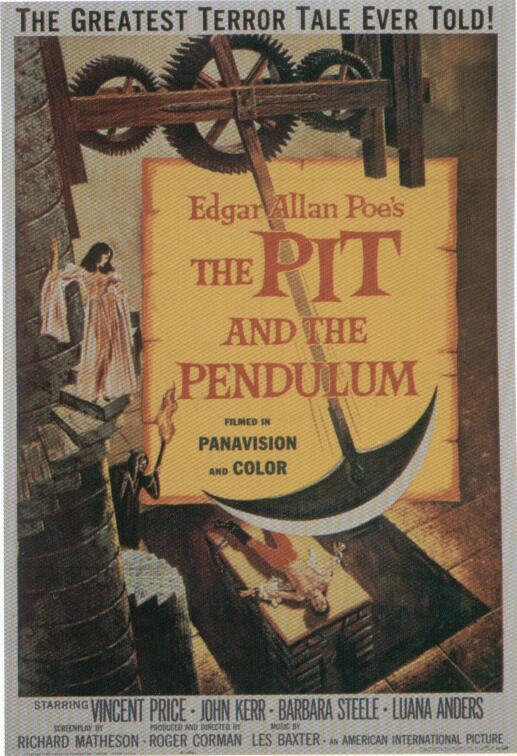
Pit and the Pendulum

Director: Roger Corman
Starring: Vincent Price, John Kerr, Barbara Steele, Luana Anders, Antony Carbone
Production Budget: US$200,000 (1961 dollars)
Running Time: 80 min

Roger Corman directed a number of Edgar Alan Poe adaptations in the early '60s, and this was the second - and the second to feature Vincent Price - after House of Usher (1960). Price plays neither the Pit nor the Pendulum, instead taking on the role of Don Nicholas Medina, 16th century Spanish (or possibly Italian, I never quite worked it out) lord and grieving husband. The movie starts with the rather clichéd man rides in carriage to castle, but local carriage driver refuses to get close to the castle so man has to walk the rest of the way scene (also seen in the recently reviewed and much older Nosferatu). The man in question is Francis Barnard (Kerr), Englishman and brother to the recently deceased wife of Nicholas. He insists on finding out the truth about the death of his sister Elizabeth (Steele), while spending some quality time with Nicholas' sister, the lovely Catherine (Anders). Nicholas initially insists that Elizabeth was killed by a blood disease, but things turn a little murky when a local doctor (Carbone) and friend to the Medina's comes to visit, and they admit that she was killed from fright. Or was she? Events begin to get a little darker when we discover that Nicholas' father was in the Spanish Inquisition, and used to hold his 'inquiries' in the dungeon of the castle, and nobody ever bothered to remove the tools of that particular trade.

The mystery evolves throughout the movie, with plenty of twists and surprises along the way, all leading to an excellent shock ending. The castle setting is beautifully realised, especially the dungeon. The performances are fantastic, with Price giving a very subtle performance for most of the film, as the distressed and confused husband, although you get a few glimpses of the wacky and crazy act he was so famous for. Everything works; the scares are scary, the twists are unexpected but 'obvious when you think about it' (the perfect kind of twist, in my opinion) and the tension builds nicely throughout. A class act.
"No one will ever enter this room again" - Catherine Medina
It is worth seeing this movie for that line alone.

$$$$

P.S. I still would like to see Uwe Boll direct an adaptation of Pitfall!, but I guess I'll have to wait until he is done butchering Dungeon Siege.

Thursday, November 30, 2006

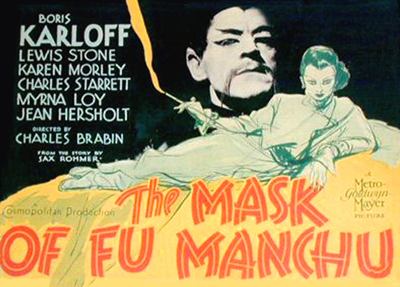
The Mask of Fu Manchu

Director: Charles Brabin
Starring: Boris Karloff, Myrna Loy, Lewis Stone, Lawrence Grant
Production Budget: US$327,627 (although it was 1932)
Running Time: 68 min
"Will we ever understand these Eastern races?" - Nayland Smith (Lewis Stone)
Boris Karloff plays Dr. Fu Manchu, Chinese intellectual and wannabe ruler of the world. It took him 2.5 hours each day to apply his make-up, which is a valiant sacrifice considering, well, they could have got a Chinese guy to play the part, who could have spent five minutes combing his moustache and looked more convincing. Likewise, his daughter, Fa Loh See is played by all American girl Myrna Loy. Cultural insensitivity aside, this is a thriller; Archeaologist Nayland Smith is kidnapped by the evil Dr. (as opposed to the Dr. Evil), who tries to wring out of him the location of the tomb of Ghengis Khan, the contents of which will allow Manchu to create an Asian superpower which will enslave the world. Lionel Barton (Grant) travels to Mongolia to find Khan's tomb before Manchu does. Once found, Smith attempts to smuggle the relics - a mask and sword - out of the country. Things don't go exactly to plan; people get tortured, drugged, zapped, donged and fed to crocodiles. I guess Dr. Fu Manchu is the original Dr. Evil.

There have been at least ten Fu Manchu movies, based on the novels of Sax Rohmer, and this is considered the best. I don't really have much good or bad to say about this movie, it was just OK. There are some pretty cool special effects for 1932, such as Fu Manchu manipulating static electricity with his bare hands. Karloff has some charisma, and the other leads are perfectly fine in their respective roles. I may not, however, be judging this movie completely fairly. It was late, and I rested my eyes a couple of times before the end.

If you are a Boris Karloff fan you'll want to see his performance, or you could check out the film as an historical curiosity. Otherwise, stick to Flash Gordon and Ming the Merciless - pretty much the same character but less racist, more planetist, and with a kick-arse soundtrack.

$$1/2

Wednesday, November 29, 2006

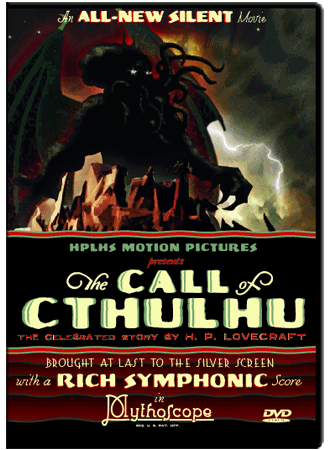
The Call of Cthulhu

Director: Andrew Leman
Starring: Matt Foyer, John Bolen, Ralph Lucas
Production Budget: Unknown (v. small)
Running Time: 47 min

A man inherits the notebooks of his great-uncle, in which are detailed an investigation into a strange cult. He becomes obsessed with continuing the investigation, and travels the world searching for clues, becoming more and more frantic as he gets closer to the horrible truth - that there is a big squid demon living on an island in the pacific (kind of a spoiler, I know, but it is on the poster).

H.P. Lovecraft published The Call of Cthulhu in 1928, and while this movie was released in 2005, it is made to look as if it were made at the time the story was published. Produced by the H.P. Lovecraft Historical Society, this is a fascinating example of budget film-making, and an amazingly well made movie.

The movie was produced in what the makers call 'Mythoscope' - combining modern equipment with old techniques to make the movie appear as though it was filmed in the 1920s. There is no dialogue or sound other than music, and the special effects involve miniature sets, stop motion animation and water imitated by waving sheets. There is no CGI but some green-screen. The attention to detail is such that they even rough up the footage and add silent film flickering in post-production. The music is likewise altered to appear older. While it is unlikely to fool anyone into thinking it was actually made in the '20s - it's still a little new looking - I adore what they have done with it. Rather than attempting to make a low budget film look like a big budget film (like some of the other movies in the festival, which fail rather miserably), they have used the low budget to their advantage - they are not afraid to make things that look a bit fake in order to capture the silent-movie look and feel. They have also avoided the often dangerous task of modernising the story for a contemporary audience (although someone else is doing precisely that, with Tori Spelling, no less), and have instead embraced the anachronisms, and remained very faithful to the story (er, at least I assume so, having obviously not read it - see my preview).

The music is amazing. It is a big symphonic score, precisely matching the on-screen action, and it just blew me away. It's rare that music in a movie has such a big effect on me, but I guess that given that the movie is otherwise silent, the music is more in-your-face than usual. There are some moments that are quite scary, especially a scene involving a police raid on a cult gathering in a swamp. While the imagery is quite disturbing at this point, I can also imagine closing my eyes and being equally frightened by the haunting tunes. Actually I'd probably be more frightened as I wouldn't be able to see what was happening and my imagination would go crazy from the aural bombardment.
Mental Note: keep eyes open
If you are a fan of gothic horror, silent film, or the beauty of low-budget film making, seek this movie out. If you can see it on the big screen, great, otherwise get the DVD and turn it up LOUD.

Apparently some people genuinely believe in and worship Cthulhu, but then people like blood sausage too. People are morons.

$$$$1/2

Tuesday, November 28, 2006

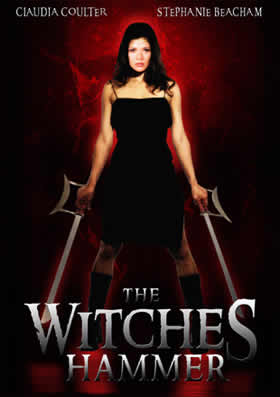
The Witches Hammer

Director: James Eaves
Starring: Claudia Coulter, Johnathan Sidgwick, Stephanie Beacham
Production Budget: Unknown (small)
Running Time: 93 min

A young woman is killed, then genetically modified into a vampire by government scientists and forced to work in their vampire slaying department. When her agency is destroyed by vampires and witches, she hooks up with a different set of witches to find an ancient tome called Malleus Maleficarum or, in English, The Witches' Hammer (what do you know, I was right about the bad grammar in the title) before the bad guys get it. This main story is interspersed with the back-stories of a number of the supplementary characters, and the story of the book itself.

A fanboys wet dream, this movie has it all: vampires, witches, demons, ninjas and circus freaks. The producers are obviously big fans of Buffy, Highlander and Blade.

There isn't much new here. It very much resembles an early episode of Buffy, with special effects to match. Coulter is effective in the main role, being tall, athletic and sexy, and Stephanie Beacham adds some class as the head witch. There are a few inventive set pieces, and a clever torture scene involving a vampire and a sun-bed, and the back-stories look nice.

A few things don't make sense, like at the beginning of the film I am sure she was attacked by a vampire. Why then, was it necessary to genetically modify her into a vampire? Anybody? Also, while it is admirable to incorporate historical facts into the movie, it's a little odd that the Witches' Hammer is this movie is a handbook for witches, when the actual Malleus Maleficarum was a witch-hunters handbook. This is the kind of thing the Buffy crowd are going to pick up on. I feel sorry for the director and actors if they ever find themselves at a science fiction convention.
Least. Historically. Accurate. Movie. Ever.
Not a bad effort, but the concept is perhaps a bit ambitious, and the small budget does hurt (did I just say that?). It lacks the wit of Buffy, but people who are into that kind of thing will find plenty to like here.

$$1/2

Wednesday, November 15, 2006

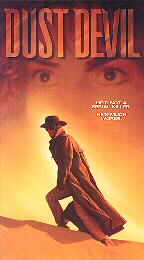
Dust Devil

Director: Richard Stanley
Starring: John Matshikiza, Robert John Burke, Chelsea Field, Rufus Swart
Production Budget: £4,300,000
Running Time: 103 min

The last film in the Compass of Horror, was, oddly, North, considering the movie shown was 1992's Dust Devil, made by a South African in Namibia. Not to worry, as it was a fine end to a great festival.

The titular Devil is a shape-shifting spirit who takes the form of an American nomad (Burke), wandering the desert roads of Namibia around the end of South African 'administration'. He finds lost souls - the lonely and unloved - and rather violently puts them out of their misery, usually after fulfilling their and his immediate sexual desires. Wendy (Field) is one such soul. Having run off from her husband, she picks up a hitchhiker who, while charming at first, turns out to be the previously mentioned psycho killer. Meanwhile, the local police are on the lookout for a serial killer with the help of the local shaman/drive-in movie manager, and Wendy's husband is looking for his wife.

Filmed on location in Namibia, Dust Devil is slow moving yet riveting. There is not much to the story itself - with a mystical element added to the traditional serial killer/slasher flick/road movie formula - and the acting is reasonably good, but the visuals are fantastic. There are some nice shots of long, straight desert roads, and Stanley makes great use of the heat haze that sits over the desert. There is also an amazing scene set in an abandoned mining town, half buried in sand. There are only a couple of scenes that could be considered horror per se, mostly centering on Wendy's attempts to escape from the Devil. The tension, however, is well maintained throughout, and the Dust Devil is well crafted bad guy. It cuts nicely between the three competing story lines, following Wendy, the police, and the husband at different points. The ending is also clever, with a bit of a twist that I wouldn't have seen coming, except that some academic spoiled it for me in a lecture on psychoanalysing movies the previous evening. If I ever see him again, I'll give him something to psychoanalyse.

The film includes elements referencing the end of apartheid, and the effect this had on not only the South Africans, but the people of Namibia, which was administered by South Africa during this period. Scenes invoking the after-effects of South African politics include the beating of a white man in a bar full of black men (they just can't trust him, even though he means no harm), and the beating of a black man by a couple of white policemen. The pull-out of troops enlivens the final scene of the movie.

I can't recall seeing many movies set in southern Africa. There is The Gods Must Be Crazy and that's about it. A location can have such a big impact on the feel of a movie, and Dust Devil is all about the location. This gives the movie a uniqueness, when it otherwise could have been just another horror/road movie.

After the movie, Richard Stanley and critic Kim Newman had a panel discussion, with Stanley giving some great and some bizarre answers to audience questions. He described spending a night painting mystical drawings on a wall with pig's blood in order to get one of the classic shots in the film. He also described his relationship with the druids (they won't let him in their stone circles because he won't wear white), and his sister (he genuinely expects her to be murdered for her continued belief in Apartheid). He also explained why he was booted off/quit the remake of The Island of Dr. Moreau, that he had written and had started shooting before John Frankenheimer took over. He thinks the reason is that the movie he wanted to make would be too extreme for a mass audience, yet the budget was such that a mass audience was needed to recoup costs, and the producers got scared. Also, he's not allowed to make any more movies in Namibia, even though he'd love to, because the government has a thing against sex and violence. Apparently for his next movie, he's moving on to Canary Islands sex and violence, for a project called Vacation, which sees an American couple stuck in the Middle East when a nuclear war begins.

This may be the last time this film gets shown in a cinema, as Stanley is donating his copy of the print to the BFI archives, which is a shame, because the scope of this film is such that it really shines on the big screen. Unlike End of the Wicked, oh man, did I mention how crap that was?

$$$$

Sunday, November 12, 2006

End of the Wicked

Director: Teco Benson
Starring: Charles Akafor, Hilda Dokubo, Alex Usifo
Production Budget: US$50,000
Running Time: ~100 min

The Nigerian film industry (Nollywood, seriously) is one of the biggest producers of feature films in the world. Nearly all of their films are produced on video, and are therefore called video-film. Why have we westerners never heard about this industry, and why do these films not cross-over to the western cinema audience, as occurs with the occasional Bollywood and Iranian movie? The Nigerian video-films are nearly all in English, even. But you won't see this movie at your local video store, cinema or T.V. channel. You won't even see it on the IMDB (so therefore it doesn't exist, right?). How come?

Well, I could go into the rather extreme cultural differences between us and them so-to-speak, and how the traditions in storytelling and Nigerian superstitions do not translate well. But I couldn't really be bothered, so I'll leave that to other, more understanding critics (like this , the only other review I could find). I'm just going to rail into it, because I think is that this movie sucks, badly.

There is a story. Chris Amadi has a good life. He is prosperous and has a loving family. There is just one problem, his mother is really a witch named Lady Destroyer. She begs the devil to destroy him and his families. I couldn't exactly work out why she did this, but I think it was something to do with him being happy and successful, and witches can't stand that kind of thing. So Chris' life starts falling to pieces, his son becomes one of the devils minions, his business falls apart, people close to him start dying, and in desperation he seeks help through black magic. Bad idea. His wife, on the other hand, seeks solace in Jesus Christ, and things turn out OK for her.
"This film is coming to you by the special grace of God. There have been several near successful attempts by the powers of darkness to stop it, because of its great expositions" - Opening credits, End of the Wicked.
I can forgive poor production values; Nigeria is a third world country with many poor people, and no government support for the arts. The special effects are outrageously bad, and sometimes truly hilarious, especially the flying scenes, where you can clearly see that the guy is lying on a bench. The acting is actually OK, in a pantomime kind of way. However this movie is not just badly made, it is a misguided piece of religious propaganda.

The first half an hour or so are quite fun, in a 'this is so bad it's funny' kind of way. The scenes in the witches coven (which are genuinely supposed to be terrifying) are particularly funny, with the witches dancing around (seductively, according to the devil's instruction) and laughing manically except when the devil (frequently) raises his arm to speak. The soundtrack for these scenes consists of a chorus of people crying 'woooooooooo... woooooooooo... wooooooooooooooooo', you know, like you used to do to scare your little sister. But once I grew tired of these scenes, which are basically the same scene over and over again I got bored, and then I got concerned at the in-your-face religiousness of it, gaped at the mother producing a giant penis with which to rape her daughter-in-law and then they cut a goats throat on screen and I pretty much gave up on it from there. There is no motivation for anything that happens (money, power, sex, surely everything in life is related to one of these), it is simply that these witches are bad people and they like bad stuff to happen to other people.

This movie was not disturbing like other horror films can be, but I was disturbed. It appeared to be an attempt to perpetuate myths and superstitions among an uneducated population to scare them into going to church. Or was it? It all became a bit clearer and scarier when the producer of the film, Evangelist Helen Ukpabia spoke following the screening. Those opening credits weren't some ironic joke, of the 'this is based on a true story' kind. No, she actually believes this stuff, and is intent on showing true representations of the effects witchcraft can have on families in Nigeria. So, it is 'based on a true story' but without the irony. Suffice to say I'm staying the hell away from Nigeria.

If you are truly interested in an unusual cultural experience, well I suppose you could do worse. After all, female circumcision is an unusual cultural experience.

$

Thursday, November 09, 2006

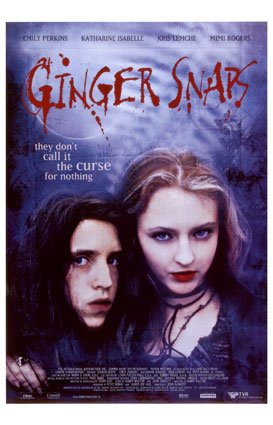
Ginger Snaps

Director: John Fawcett
Starring: Emily Perkins, Katharine Isabelle, Chris Lemche, Mimi Rogers
Production Budget: US$5 million
Running Time: 108 min

They Don't Call it the Curse for Nothing

Ginger (Isabelle), 16 and Brigitte (Perkins), 15 are inseparable sisters who live in the dull Canadian suburb of Bailey Downs, well, dull apart from the 'Beast of Bailey Downs' which has been tearing apart the local dog population. They hate the world, and they cannot stand the idea of growing up and being like everybody else (they have had a suicide pact since they were seven). For their school project they stage and photograph violent death scenes.

They are out in the woods one full moon when Ginger gets her first period. The blood draws the attention of a certain 'beast' which proceeds to savage Ginger, who quickly recovers - a little too quickly - but is not quite the same from then on. Obvious changes such as hair where their wasn't any, and a tail that grows longer each day combine with psychological changes such as a sudden interest in boys to put a strain on Ginger and Brigitte's relationship. The death of the local bitches (one dog, one girl) doesn't help matters. Things draw to a head as the next full moon approaches.
"It's a metaphor you see, for being horny." Sid Greenfield - Chef Aid: The South Park Album
This movie wears it's metaphor on it's sleeve. Blood, hair, libido, uncontrollable rage - it's par for the course for a teenage girl, and here it's all wrapped in up in a snarling beast, with breasts.

The performances from the leads are good. Perkins sulks her way through the whole film, while Isabelle transforms from boy-hating virgin to slut to beast with ease. The supporting cast are pretty forgetful, apart from Mimi Rogers who is fun in her role as the girls' ever-optimistic mother.

The special effects are pretty cool for such a low budget film. There is no extended transformation scene such as in An American Werewolf in London, A Company of Wolves or The Howling, but this movie concentrates more on relationships and diallogue than over-the-top effects. The werewolf itself is a little odd looking (did I mention it has breasts) but effective, and the last ten minutes are suitably creepy to mark this as a genuine horror film.

Ginger Snaps is funny, scary and nicely directed, and it make you wonder why no-one previously thought to link werewolves and their lunar cycles with girls and their menstrual cycles. It was obviously a good enough idea that two sequels were produced; Ginger Snaps Unleashed, which follows the events in the first movie, and Ginger Snaps Back, an alternate universe type sequel set in the 19th century. I saw Unleashed a couple of years ago without realising it was a sequel, and still liked it, and I'm keen to see the third.

After the movie, they showed the short documentary Menstrual Monsters: The Ginger Snaps Trilogy, a somewhat interesting dissection of the themes in the films, although it had what I thought was a rather pointless audience survey portion at the end, which came to the obvious conclusion that girls generally like it and think it has feminist themes. The panel discussion with director John Fawcett and the makers of Menstrual Monsters had some interesting moments - apparently the Americans hated Ginger Snaps, while the Brits loved it - although way too much time was spent talking about feminist themes and lesbian subtexts, when they could have been talking about why they put breasts on the werewolf. Actually, I guess that's all part of the same thing.

$$$$

Tuesday, November 07, 2006

Rampo Noir

Directors: Akio Jissoji, Atsushi Keneko, Hisayasu Sato, Suguru Takeuchi
Starring: Tadanobu Asano, Mikako Ichikiwa, Hanae Kan, Ryuhei Matsuda, Kaiji Moriama
Production Budget: unknown but small
Running Time: 134 min

Rampo Noir is a four part horror anthology from the more extreme end of the Japanese film industry. It is based on the short stories of 1920s Japanese supernatural author Edogawa Rampo (who was himself hugely influenced by Edgar Alan Poe, hence his name). Each part has a different director, and a different aesthetic, although all are linked by the presence of Tadanobu Asano, the Johnny Depp of Japanese cinema.

The Mars Canal: A short, almost silent piece following a naked man in a stark, otherworldly wilderness.

The Hell of Mirrors: Police investigate the strange deaths of several women, and the trail leads to a beautiful man with a strange fetish for mirrors.

The Caterpillar: A woman cares for her armless, legless, scarred and mute husband (the caterpillar). She cares for him by keeping him in a partially destroyed WWII bunker, feeding him, torturing him and using him for her own sexual gratification. Nice.

Crawling Bugs: A man with uncontrollable itchiness (due to the presence of imaginary bugs) fantasises over the actress he chauffeurs, and naturally ends up killing her, then setting about dressing her and painting her skin to preserve her beauty while her corpse slowly rots. Very black and quite funny.

It is strange that while this movie is not overly explicit in either sex or violence (it received an MA15+ classification in Australia), the visuals are still at times highly disturbing. This is especially so in The Caterpillar, where the man is so horribly deformed and helpless that it is as if the woman is doing these horrible things to a baby. The fourth story is the best, with Asano giving a great performance as the chauffeur, going about his preservation of the rotting corpse as if it is the most normal thing in the world. The ending is bizarre, yet brilliant.

I'm not a big fan of anthology movies, but this is suitably bizarre and fascinating that I did really enjoy it.

The director of The Caterpillar segment, Hisayasu Sato, attended the screening, and had plenty to say about the film, in Japanese, and I am sure we missed lots of juicy bits in the translation. A number of times he matter of factly mentioned his past as a creator of 'adult films', and how he sees little difference between that kind of film-making and how he went about making this movie. I suppose he is right, in that while this is no porno, it is certainly a film for adults, and pushes boundaries in a way that his 'pink' films no doubt do, er, not that I've ever see one. He also mentioned that Rampo Noir was a conscious effort by the producers to create a Japanese 'horror' film that moved away from the commercially successful but overly clichéd J-horror movies such as The Ring, Ju-On: The Grudge and Dark Water. I believe they succeeded, as I cannot really see this movie being remade in Hollywood, starring Sarah Michelle Gellar as the caterpillar.

A great start to the festival. Next up is Canadian werewolf chick-flick Ginger Snaps.

$$$$

Wednesday, November 01, 2006

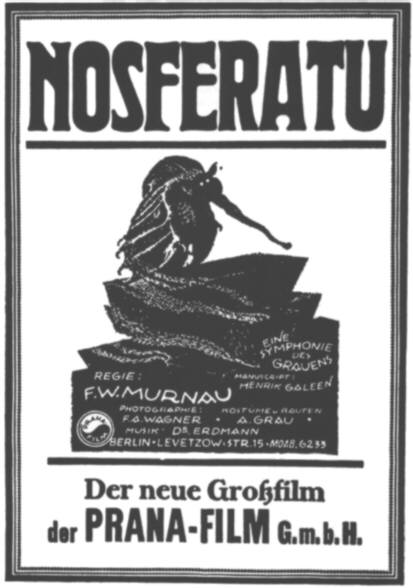
Nosferatu: A Symphony of Horror

Director: F.W. Murnau
Starring: Max Shrek, Gustav von Wangenheim, Greta Schröder
Production Budget: unknown but small (it was 1921 after all)
Running Time: 88 min approx.

The first filmed version of Bram Stoker's Dracula, Nosferatu almost ceased to exist when Stoker's widow tried to sue the production company for copyright infringement (they declared bankruptcy) and had all 'known' prints destroyed. Being unable to secure the movie rights to Dracula, the producers had simply changed the names of the characters and hoped no one would notice that it was otherwise almost exactly the same. Fortunately, it has survived, and a number of different versions are floating around, some poor video transfers in black and white, and some, like the version I saw in the cinema, beautifully restored with colour tinting.

If you've seen any version of Dracula, or read the book, you already know the story: The Count (in this case Count Orlok) sends word to a local real estate agent that he wants to buy a house, so the agent sends a young employee to Transylvania to get the paperwork sorted out. While there, the Count sees a picture of the young man's wife, gets a bit peckish for her beautiful neck, and sets about making his way via ship to see her, while the young man rushes back overland to try and stop him.

I had not seen this film before, but I had seen Shadow of the Vampire, the fictionalised account of the making of Nosferatu (where it turns out the Shrek really is a vampire - or is he a big green ogre?), and combined with the many references and scenes that have made their way into other movies, T.V. shows and music videos (e.g. Under Pressure by Queen and David Bowie) meant I had already kind of seen a reasonable chunk of this movie. It was however nice to watch it in it's entirety, to get a feel for the pacing and how it all went together.

When watching a film like this, like looking at a classic painting, it is important to take into account the time and place in which it was created. With that in mind, I can forgive the bizarre acting (especially Wangenheim and his incredible overacting) and the extremely dated special effects (one ends up giggling at scenes such as one where Nosferatu's carriage comes racing through the forest in fast forward, which was probably terrifying at the time, but now gives it a Benny Hill feel), and concentrate on the brilliant performance of Shrek, and the
technical brilliance of the production.

Nosferatu is most effective when Shrek is on screen. The rest of the film drags a bit. He is only on screen for a few minutes total, so the audience doesn't get used to his bizarre appearance and mannerisms. Whether beautifully framed in a doorway, filmed as a shadow only or glimpsed staring out a distant window or rising from a coffin, every shot is awe inspiring. The way he stares out with those bulging eyes (he never blinks on-screen) is hypnotic, and creepy. It is very easy to see why his performance has been so admired/referenced/copied over the years.

I saw this film the Saturday before Halloween at the Arnolfini in Bristol, complete with live musical accompaniment by COMA. Having the live music certainly added to the experience, although I found it a bit too improvised, and lacking in melody. I haven't really experienced colour tinting on black and white films before, and it previously would have had me worried that it meant the kind of dreadful colourisation of black and white films that used to be popular in 70s T.V. versions. Actually, colour tinting was used extensively during the black and white era in order to evoke particular moods or lighting conditions. A great example in Nosferatu is that darkness is always represented as a blue tint, while dawn might be represented pink, and a forest at midday by green, etc.. It's all very subtle, and without this it would be impossible to recognise that Count Orlok only ever comes out at night: the technology back then made it impossible to actually film in low light.

I cannot promise that you will love (or even particularly enjoy - although I did) this film, but if you are interested in the origins of film and especially horror film, this is essential viewing. Nosferatu is now in the public domain, meaning it can be shared freely. So, you could watch the whole thing on, for example, Google Video, though if I were you I'd look out for it on the big screen. Otherwise you might mistakenly think it's crap.

$$$1/2

Wednesday, October 11, 2006

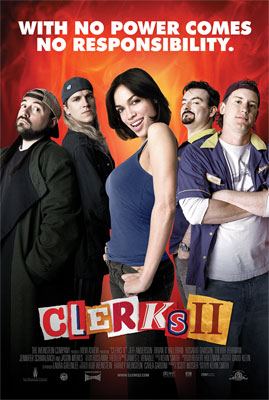
Clerks II

Director: Kevin Smith
Starring: Brian O'Halloran, Jeff Anderson, Rosario Dawson, Jason Mewes, Kevin Smith, Trevor Fehrman
Production Budget: US$5 million
Running Time: 97 min

In 1994 I was an innocent 18 year old. I believed the Death Star was built by bad people, that the number 37 had no particular meaning, and if anyone had asked me to make like a Circus Seal I would have clapped. Then I saw Clerks, and my eyes were opened. This was the greatest "No Budget" film ever made (US$27,000). Smart, funny and extraordinarily crass, I loved every minute of it. So, 12 years later, has Clerks II opened my 30 year old eyes?

Most of the original male cast returns, older, fatter and no better at acting. There is poor loser Dante (O'Halloran), at his last day at work before moving to Florida and getting married. There is his best friend Randall (Anderson), who seemingly spends most of his life trying to ruin Dante's. And, as always, there is Jay and Silent Bob, the perpetually loitering local drug dealers. The two main additions are Mooby's manager Becky (Dawson, who can act) and nerdy, god-fearing 19 year old Elias (Fehrman, who can act, weirdly), aka Optimus Prime, the butt of many a Randall put down. And there's a donkey.

The story pretty much mirrors the original: Instead of the Quick Stop convenience store, Dante and Randall now work at fast-food restaurant Mooby's, and we once again experience a day in their lives, with all the hijinx and emotional turmoil it entails. The jokes are all there, be they scatalogical or sexual, or sexually scatalogical, or about drugs, beastiality, racism or The Lord of the Rings. Before seeing this movie, I had never realised that you could put the words 'ass' and 'mouth' together with a simple preposition and get something so distasteful. It's not outrageous, splitting your sides funny, but it does have a lot of great jokes, the kind you'll want to quote among your friends (but not your grandma). Awkwardly, it also has a lot of melodrama, which tends to fall flat through parts of the movie, although I guess the romantics in the audience probably appreciate it more than I do. And it does have a surprisingly emotional and uplifting ending.

So, to answer my own question, no, I am not a changed person for having seen Clerks II. Basically, it's Clerks all over again, with different jokes, colour film and a donkey. The main thing that was missing was originality, and I didn't have the same "I'm cracking up because I can't believe they are saying that" experience I did with the first movie. But I did have an enjoyable hour and a half, and I look forward to seeing it again on DVD.

What are you waiting for? Go and see it, you little porch monkey. And take your girlfriend... tell her it's a romantic comedy, with a donkey.

$$$$